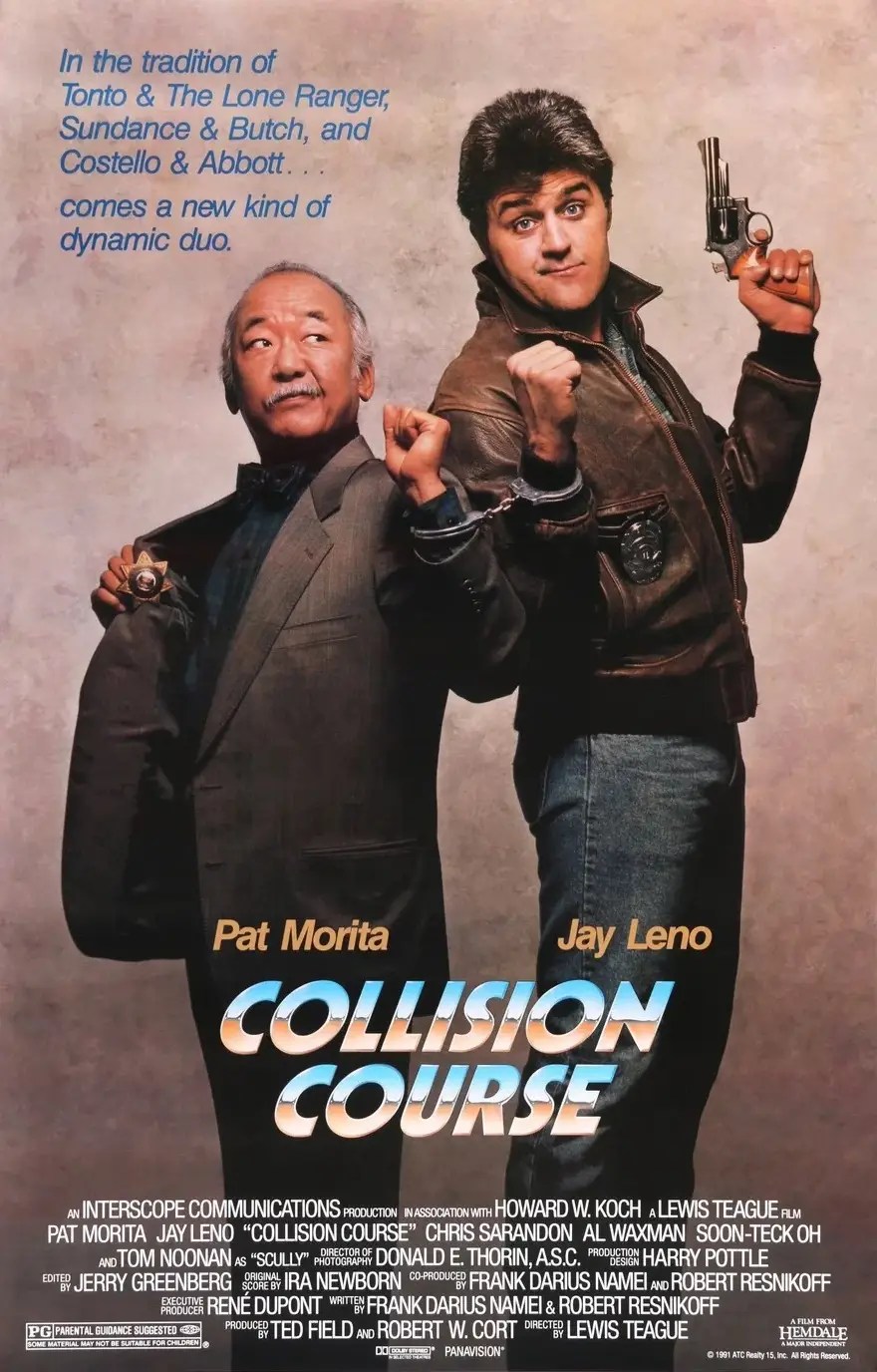
There are some movies that feel carefully developed. Others feel designed by committee. And then there are movies that feel like someone walked into a video store in 1989, grabbed three completely unrelated VHS tapes, shook them up in a paper bag, and announced, “Congratulations, we have a screenplay.” Collision Course definitely belongs in that last category.
This is a movie that gives us Jay Leno as a Detroit cop, Pat Morita as a Japanese detective, Chris Sarandon as a criminal mastermind, and a plot revolving around a stolen turbocharger important enough to create an international buddy-cop incident. This is not Lethal Weapon. It is not 48 Hrs. It isn’t even Rush Hour before Rush Hour. This is Collision Course, and somehow, against all reasonable judgment, it has earned its place on the rental rack. Just a little lower on the shelf.
That makes it a perfect fit for Rental Rack Rejects, the corner of Sunset Video Rentals where we celebrate movies that may not be “good” in the traditional, respected, society-approved sense, but still have that strange magnetic pull. These are the movies you spot buried on a shelf and immediately think, “There is absolutely no way this works, and now I need to see it.”
Our first trip into this section of the store was Second Sight, a movie that felt like a VHS fever dream assembled from loose comedy fumes and detective-show leftovers. This time we’re moving from psychic detective chaos to full-blown buddy-cop chaos with a movie that essentially asks one of cinema’s great unanswered questions: what if Mr. Miyagi and Jay Leno had to stop an international automotive conspiracy in 1980s Detroit?

Before even getting into the movie itself, you have to appreciate the box-art appeal because Collision Course is exactly the kind of rental-store trap that could get you back in the day. You see Pat Morita on the cover and immediately think, “Okay, Mr. Miyagi in a buddy-cop movie. I’m listening.” Then you see Jay Leno and your brain takes a short walk around the block to process that information. Leno isn’t popping in for a cameo here.
He isn’t playing “comedian at nightclub” or “funny cab driver.” He is the co-lead, playing loose-cannon Detroit detective Tony Costas and trying to occupy roughly the same rental aisle that housed Eddie Murphy, Mel Gibson, Nick Nolte, and every other wisecracking cop who spent the 1980s getting yelled at by his captain. That unlikely pairing is the entire hook. Loud American detective versus disciplined Japanese investigator, with enough culture-clash comedy, car chases, attitude, and late-80s atmosphere to make your VCR smell like cigarette smoke and motor oil. The box may be exaggerating wildly, but technically, it isn’t lying.
The story centers on a stolen top-secret Japanese turbocharger that has been smuggled into Detroit, which immediately makes this one of the most 1989 plots imaginable. Not diamonds. Not drugs. Not nuclear codes. A turbocharger. International crime, corporate espionage, Detroit auto-industry anxiety, and buddy-cop nonsense all orbit around an engine part as though it were the Ark of the Covenant with horsepower.
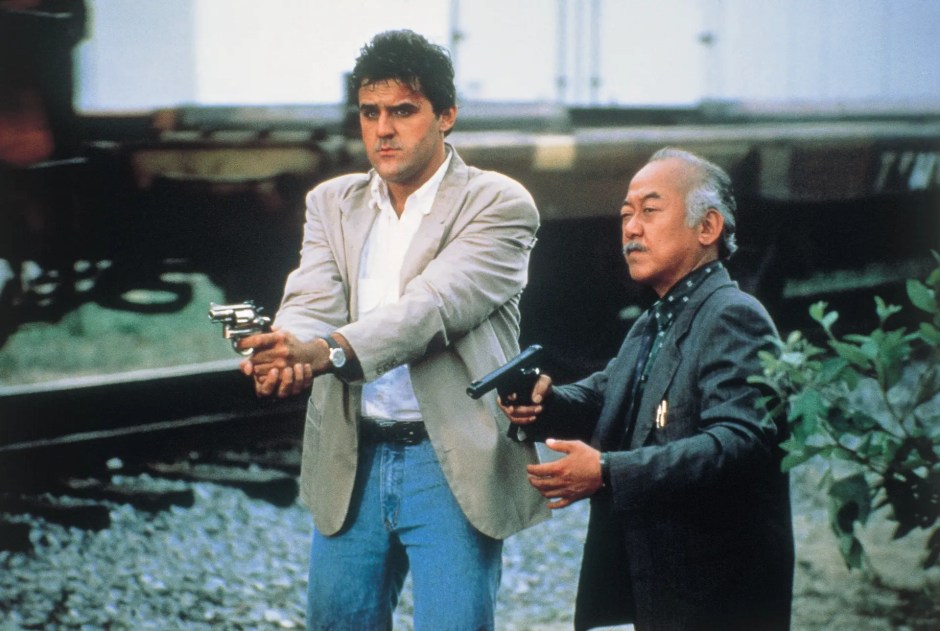
Pat Morita plays Inspector Fujitsuka Natsuo, who is sent from Japan to recover the stolen technology, naturally pairing him with Leno’s loud, messy, sarcastic Detroit cop. From there, the laws of the buddy-cop universe take over. Two people who don’t like each other are forced together by plot necessity until they develop grudging respect, solve the case, survive a few shouting matches, and hopefully destroy at least one vehicle along the way.

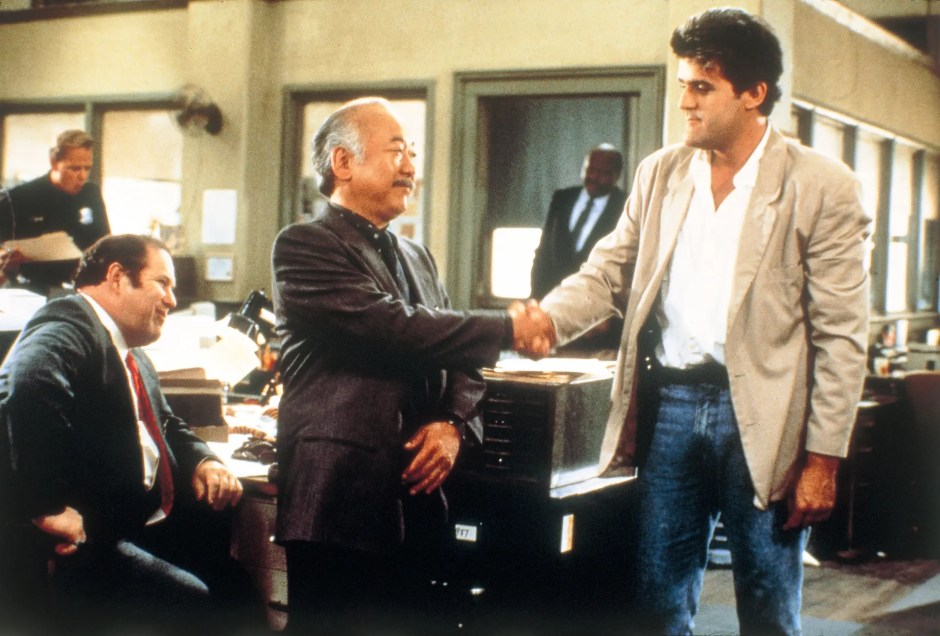
Around them, Collision Course manages to assemble a surprisingly strong supporting cast. Chris Sarandon plays the villain, immediately giving the movie slightly more class than it knows what to do with. Tom Noonan shows up with his usual unsettling presence, looking like the human version of a padlocked basement door. Ernie Hudson is here too, and anytime Hudson turns up in one of these movies, it feels like the production accidentally rented a better actor for the weekend than it originally intended. Randall “Tex” Cobb also adds another recognizable face to the mix.
There are legitimate actors here, a legitimate director in Lewis Teague, and a very real studio-era attempt to create a marketable action comedy. On paper, Collision Course should have been a bold late-80s buddy-cop movie. In practice, it feels more like the screenplay was scribbled onto scratch paper during a frantic drive down Mulholland on the way to a pitch meeting in Burbank.
The biggest problem is that the movie desperately wants to run like a smooth buddy-cop machine, but for much of the runtime the gears are grinding, the engine is coughing, and the whole thing keeps threatening to stall. Buddy-cop movies can survive thin plots, warehouse villains, and mountains of comic banter, but the central duo has to pop. That chemistry is the secret sauce capable of making an AM/PM burger taste like Five Guys.

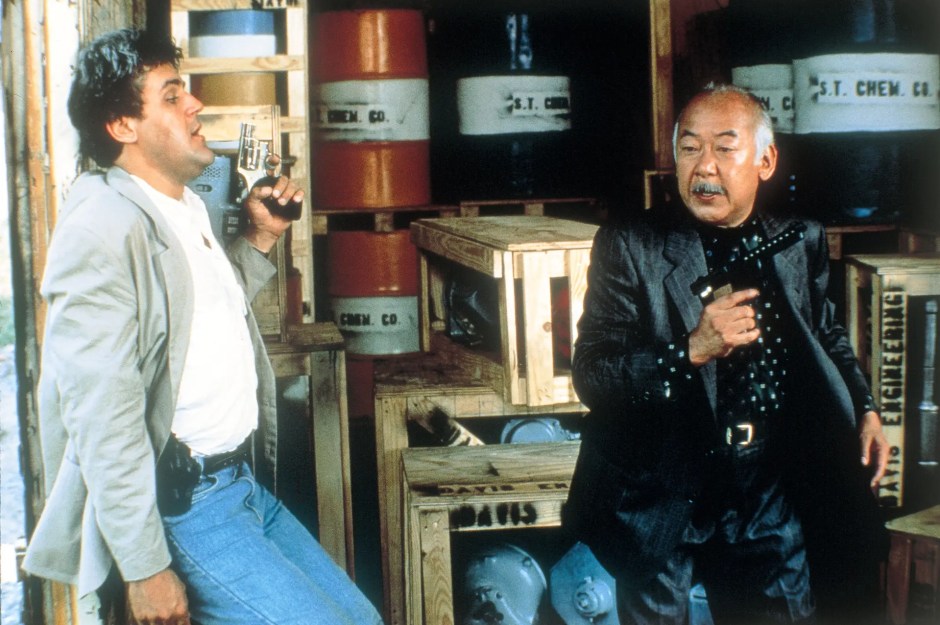
Here, Leno and Morita are interesting together, although not always in the way the movie seems to intend. Morita is easily the steadier presence. He gives the movie weight, consistency, and a little dignity, even when the script hands him material that has aged about as gracefully as a gas-station tuna sandwich. Leno, meanwhile, is fascinating because he isn’t quite playing a character so much as broadcasting a frequency. It’s the Jay Leno schtick, only now he’s wearing a cop blazer inside a movie that occasionally expects him to convince us he’s an action-comedy lead.
The result can be awkward. It can be mildly funny. At times it almost feels as though the movie itself is surprised Jay Leno was cast in the role. But that is also where the Rental Rack Reject magic begins to bubble up, because Collision Course does not fail quietly. It fails with confidence. There are chases, shootouts, arguments, gritty Detroit atmosphere, international tension, and that wonderfully specific late-80s belief that almost any two mismatched people could become a franchise if you gave them enough squibs, enough things to argue about, and plenty of saxophone music somewhere in the background. It captures a precise moment when Hollywood was fascinated with mismatched cops, Japanese business anxiety, Detroit automotive tension, and big personalities crashing into each other until something resembling a screenplay emerged.

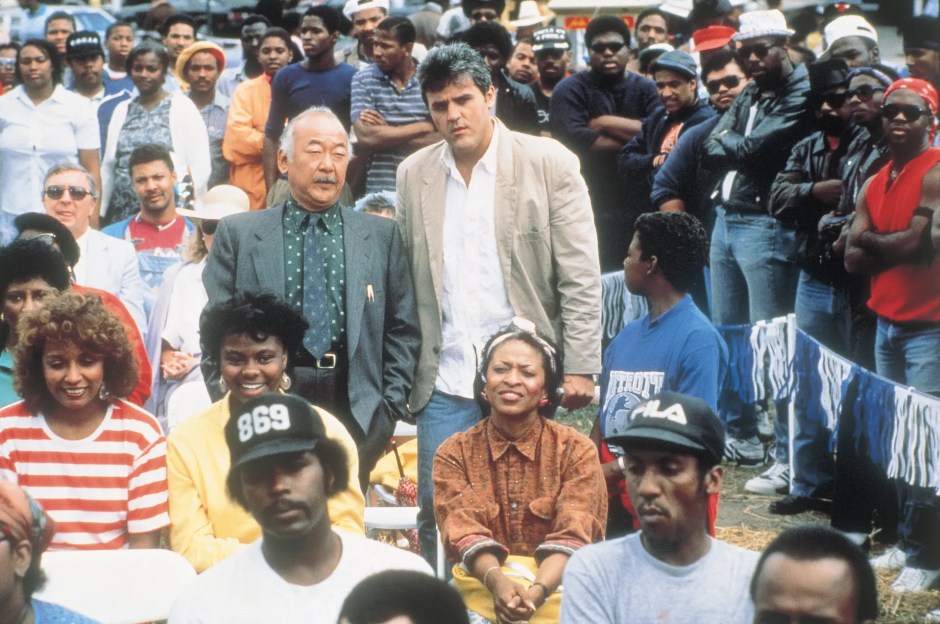
And here’s the weird part: Collision Course isn’t boring, and that matters. A bad movie can survive almost anything except being dull, and this movie is constantly handing you some new little oddity to keep you engaged. Maybe it’s a bizarre line reading. Maybe it’s Morita trying to maintain control of a scene. Maybe it’s Leno barreling through dialogue like he’s trying to reach the monologue before the band kicks in. Or maybe it’s Chris Sarandon bringing legitimate villain energy to a movie about a turbocharger.
There is almost always something strange sliding across the screen, and that gives the movie the perfect cable-TV quality. You could stumble across it at 11:30 on a Saturday morning or 11:30 on a Friday night, miss the first twenty minutes, and still understand everything you needed to know. Leno’s a cop. Morita’s a cop too, only a serious one. They don’t like each other, but eventually they will. Something about car parts. Got it. Let’s ride.
That is really where the charm comes from. Collision Course is far from elegant storytelling, but it is absolutely video-store storytelling. It doesn’t require you to lean forward and carefully follow every plot detail. It simply needs you to stay in the room and give it a chance. If you grew up in the VHS era, you know that counts for something. Not every movie was an event. Some movies were background companions. They played while you folded laundry, ate cold pizza after being outside all day, or traded sports cards with a friend on the weekend.
Strangely, years later, some of those are the movies that keep rattling around in your brain precisely because they were so oddly specific. You may not remember every plot beat in Collision Course, but you remember the sight of Jay Leno and Pat Morita standing next to each other and thinking, “Wait… this actually exists?”

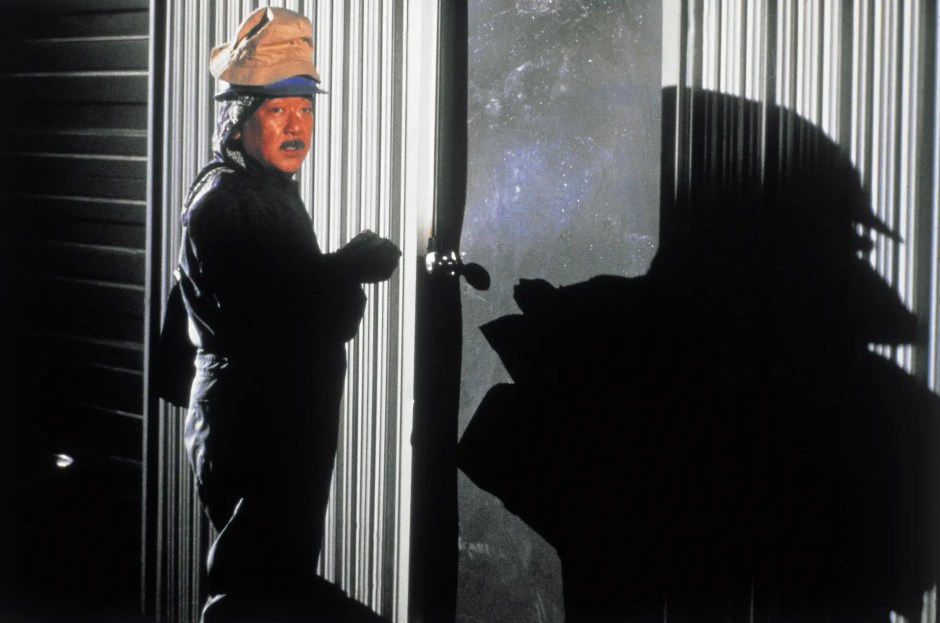
The cast helps keep that curiosity alive. Morita gives the movie its best shot at legitimacy. Leno gives it enormous oddball curiosity value. Sarandon brings genuine villain energy, while Noonan, Hudson, and Cobb keep the edges interesting. The material may be shaky, but the faces on the screen keep giving you reasons to stick around. That’s why this isn’t simply a no-name disaster. It’s a movie full of recognizable people at interesting points in their careers, all wrapped around a premise that feels as though somebody selected its plot ideas using a lotto-ball machine.
More than anything, Collision Course feels like a movie born for the rental rack. Some movies are theatrical experiences. Some become prestige objects. Others are meant to be discussed in film school and dissected for their structure, themes, and character arcs. Collision Course feels like it was made to be picked up because you recognized two faces on the cover and either all the new releases were already rented or you had decided to go hunting through the forgotten shelves at the back of the store. That isn’t an insult. There is an entire category of movies that works best when expectations are low, snacks are nearby, and nobody in the room is asking for a think-piece.
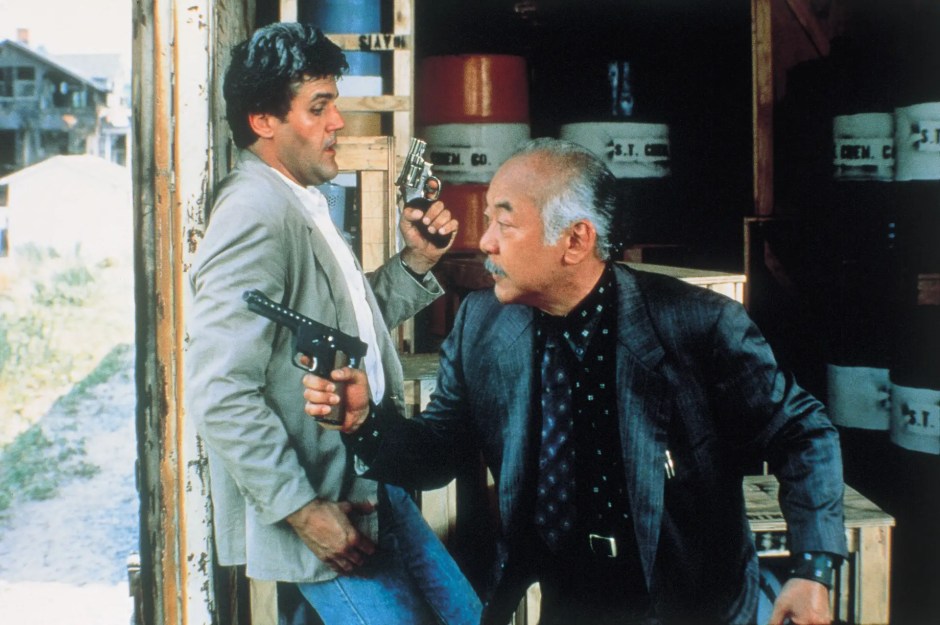
For that reason, Collision Course earns its Rental Rack Reject status as a Bottom Shelf Relic. And I mean that in the most affectionate possible way. The bottom shelf had personality. It had the strange stuff, the forgotten stuff, the movies with sun-faded boxes and a little dust across the top. These were movies that survived not because critics loved them, but because people kept taking chances on them. That is exactly the lane for Collision Course. It’s too clumsy to be considered a lost classic, too interesting to simply dismiss, too awkward to completely work, and far too entertainingly strange to ignore.
That doesn’t mean Collision Course is secretly a great movie. Let’s not put a tuxedo on a miniature horse and call it a maître d’. What it means is that this movie delivers exactly the kind of oddball rental-store experience Rental Rack Rejects was built to celebrate. It’s messy, dated, uneven, and occasionally baffling, but it also has a completely unique leading pair, a fantastic “how did this get made?” premise, a stacked bench of character actors, and enough late-80s action-comedy weirdness to make it worth pulling off the rack.
And sometimes, the best rental is the one you grabbed because everything else was checked out.
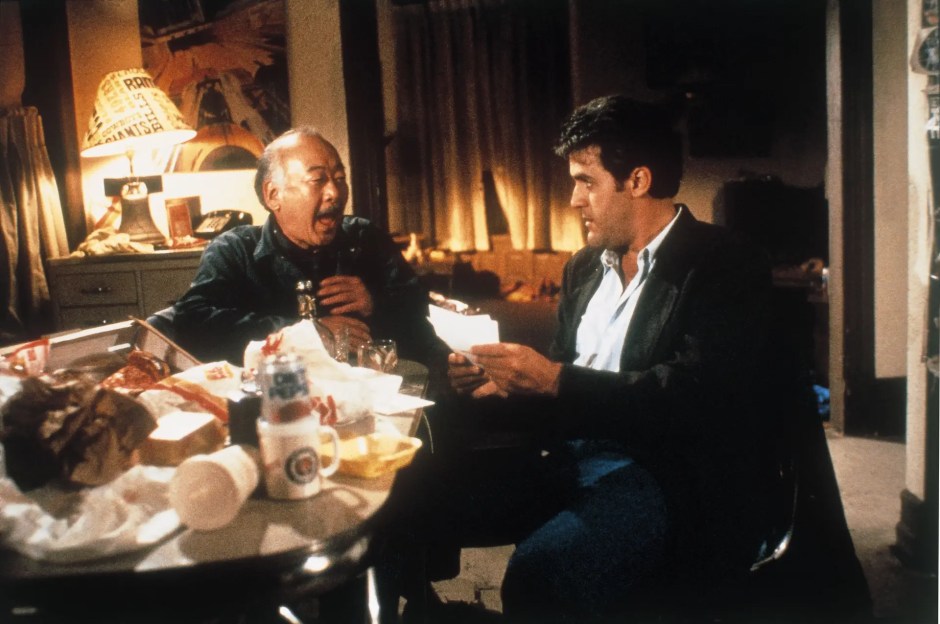
Anthony J. Digioia II © 2026

SilverScreen Analysis & Sunset Video Rentals