
There was a time when horror movies were sold on the story. A haunted house. A cursed town. Maybe a creature in the basement. Or a family that probably should’ve just moved. Then the 1980s came along, and horror discovered something even more valuable: a face. Or, sometimes, a mask. By the middle of the decade, you didn’t necessarily need to know what the latest horror movie was about. You just needed to see the hockey mask. The striped sweater. The white face. The red hair. Or the pins.
Suddenly, the monsters weren’t hiding in the shadows anymore. They were on the posters and VHS boxes. They were on T-shirts, Halloween costumes, lunchboxes, toys, magazine covers, and eventually television. Somewhere along the way, during the 1980s, the killers became the stars, and the genre would never quite be the same again.

Now, let’s give credit where credit is due. The groundwork had already been laid with films like 1974’s The Texas Chain Saw Massacre, but much of the praise goes to John Carpenter’s Halloween in 1978. Made for only about $325,000, Halloween earned roughly $47 million during its original run. That kind of return is the sort of thing that makes Hollywood develop selective amnesia about artistic restraint.
Suddenly, everybody wanted their own masked killer.
Michael Myers was already recognizable by the time the calendar flipped into the 1980s, but the decade would turn “The Shape” into something bigger than one movie. The mask became the brand. You didn’t need a close-up of Jamie Lee Curtis on the VHS box. Put Michael Myers somewhere in the background and we knew exactly which shelf we were standing in front of. Back in the ’80s, that was often all it took.
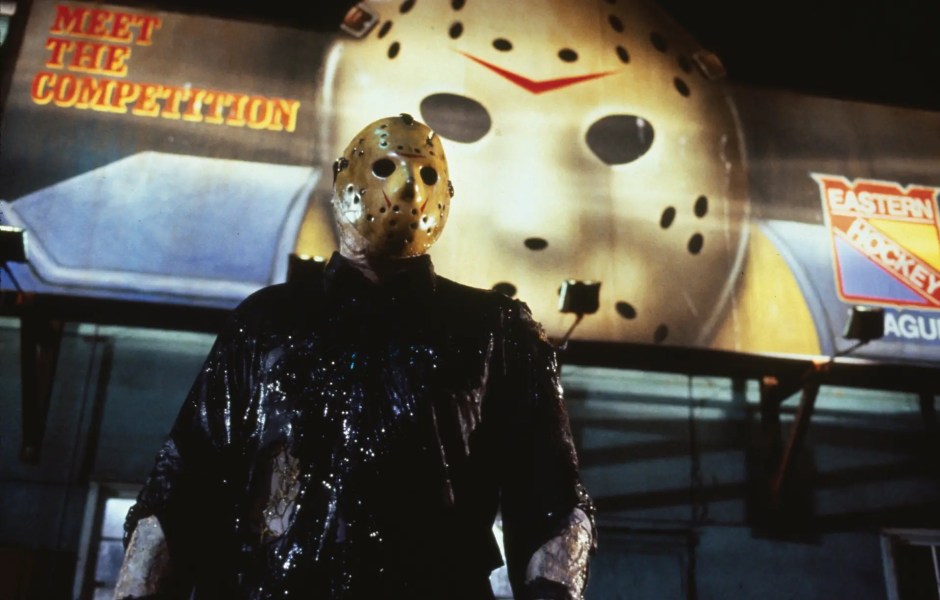
If Michael Myers helped establish the look, Jason Voorhees turned the masked killer into a pure franchise machine. The funny part is that Jason isn’t even the killer in the original Friday the 13th. We all know that distinction belongs to his mother, Pamela. Jason really begins becoming the character we know and love in Friday the 13th Part 2, where he’s still running around with a sack over his head. Not exactly the stuff of merchandising legend.

Then came Friday the 13th Part III in 1982. During production, the filmmakers experimented with a hockey mask provided during a lighting test. It was modified with those familiar red markings, and just like that, one of horror’s most famous faces was born almost by accident. Financially, Paramount had very little reason to complain. Part III cost around $2.2 million and grossed more than $34 million in the United States. From that point on, Jason wasn’t just a character. He was a logo.
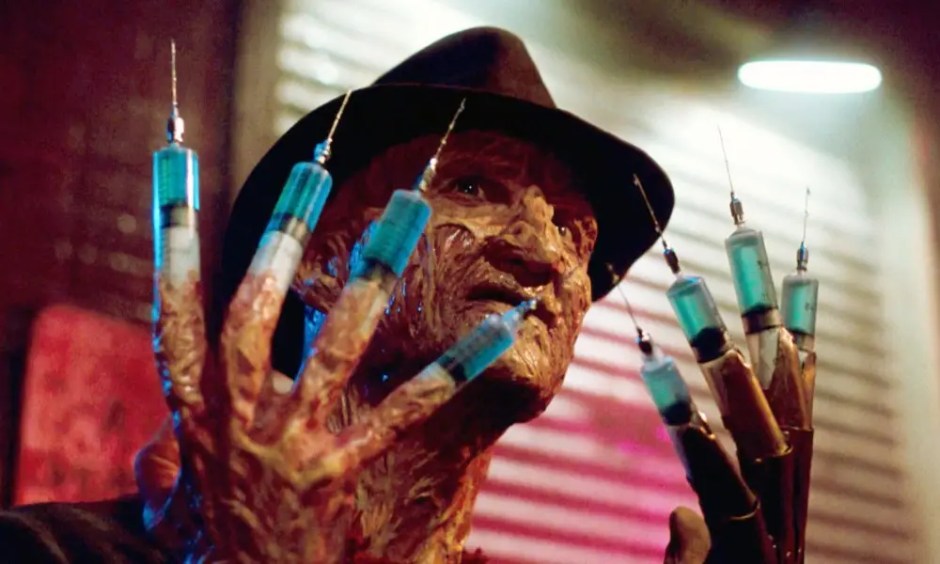
You could change the teenagers. Change the location. Change the director. Apparently, you could even call one movie The Final Chapter and then make several more. But if you kept that hockey mask around, audiences knew what they were buying. That was the genius of the horror icon. Story continuity could get a little wobbly, and it often did, yet the face remained the central selling point. As long as the monster showed up, everything was usually just fine.
And then Freddy Krueger arrived.
If Voorhees and Myers were the silent brutes, Freddy was a horror heavyweight who could probably also crush it on improv night at the Laugh Factory on Sunset. Wes Craven’s A Nightmare on Elm Street arrived in November 1984 with Robert Englund underneath the burns, fedora, and red-and-green sweater. The film opened modestly, earning about $1.2 million during its first weekend, but eventually climbed past $25 million on word of mouth.
For New Line Cinema, it was transformational. The film became the company’s biggest hit to that point, and the success of the sequels helped New Line earn the nickname “The House That Freddy Built.” Freddy may be the perfect example of the moment horror villains became genuine pop-culture celebrities because Freddy talked. That changed everything.

Jason could stare at you. Michael could tilt his head. Freddy could, and often would, insult and torment you before killing you. By the later sequels, he had punchlines and catchphrases. He looked directly at the audience with the confidence of someone who knew his name was above everyone else’s on the poster.
The franchise eventually reached the point where Robert Englund was effectively playing both monster and master of ceremonies. Freddy wasn’t just the reason people were dying. He was the reason people bought the ticket. If you grew up around video stores, you knew exactly what that meant.
You could walk into the horror aisle and spot a Nightmare on Elm Street tape from twenty feet away. That glove. That face. The striped sweater. It was practically a beacon. You might not remember whether it was Part 3, Part 4, or whichever one involved the dream baby. It didn’t really matter. Freddy was on the box. If you were in the mood for renting horror, into the basket it went.
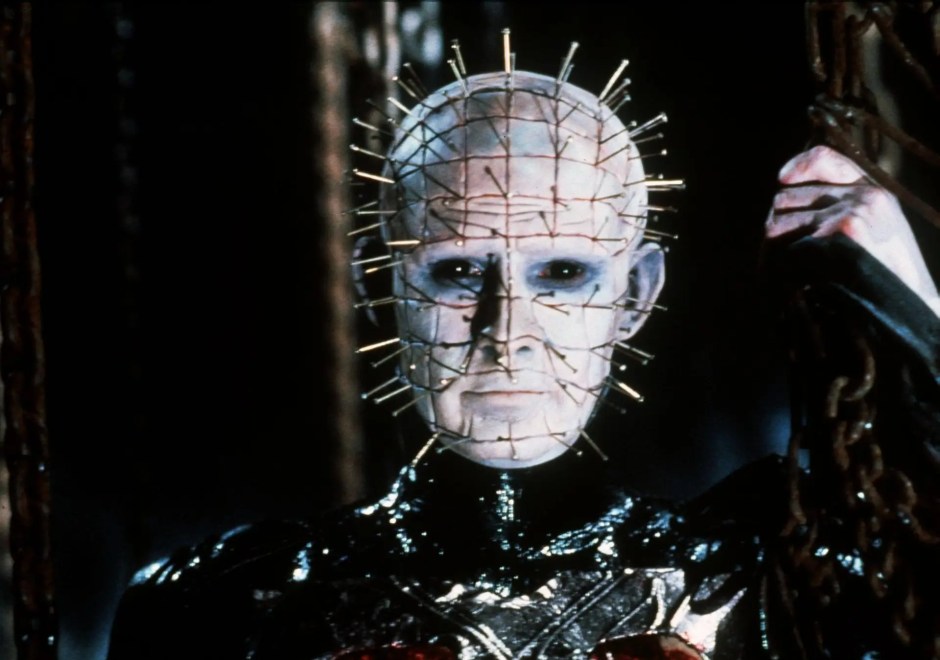
Once studios realized audiences would follow the villain, everybody wanted one. In 1987, Clive Barker gave us Hellraiser. The original movie cost only around $1 million and earned more than $14.5 million. Standing among the Cenobites was Doug Bradley as the Lead Cenobite. He wasn’t even officially called Pinhead in that first movie, but that face was impossible to forget. The pale skin. The grid carved across his head. The nails. That calm, almost gentlemanly voice.
He looked nothing like Jason or Freddy, and that was exactly the point. By the sequel, the character audiences called Pinhead was becoming the recognizable face of the entire franchise. You could practically watch studios learning the lesson in real time: find the face, build around it, and then put that face front and center on the box art.
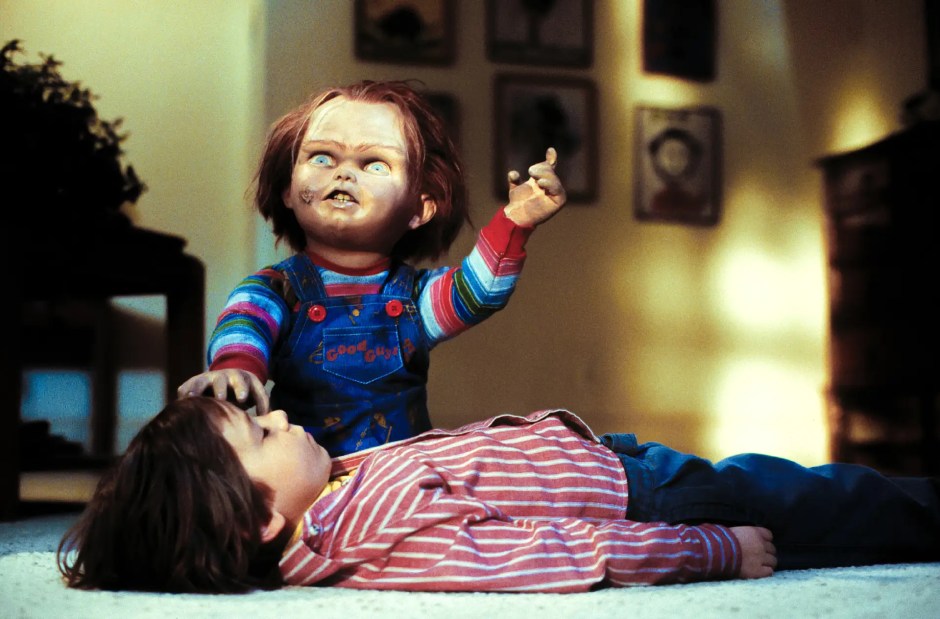
Then, in 1988, a three-foot-tall plastic doll joined the club and would eventually challenge Freddy Krueger for the position of horror’s class clown. Child’s Play introduced Chucky, with Brad Dourif providing the voice and personality of serial killer Charles Lee Ray trapped inside a Good Guy doll. The movie opened with about $6.6 million and ultimately earned more than $33 million domestically, with worldwide grosses eventually topping $44 million on a budget listed between $9 million and $13 million. Again, the concept was good, but the character was gold. Chucky could talk. Chucky could joke around. Most importantly, Chucky could be marketed. Unlike Michael or Jason, you could literally sell an exact doll of him, which feels almost unfair.
By the end of the decade, horror had assembled its own twisted version of an all-star team: Michael Myers, Jason Voorhees, Freddy Krueger, Pinhead, and Chucky. Even Leatherface was still hanging around, returning in The Texas Chainsaw Massacre 2 in 1986 as a reminder that some of these horror legends had roots stretching back into the 1970s. What made the ’80s different wasn’t simply that horror had memorable villains. Horror had always had memorable villains. Dracula was famous. Frankenstein’s Monster was famous. Norman Bates was famous. The difference was that the 1980s turned horror villains into recurring franchise personalities.
Even characters that were never mainstream theatrical mainstays, like Phantasm’s Tall Man, Shocker’s Horace Pinker, or the Maniac Cop, could become dependable attractions on home video. A new sequel wasn’t always sold as a continuation of the story. It was sold as another chance to see the monster. Jason’s mask returned. Freddy was in another nightmare. Michael was back from the dead. Again. And no matter how many times the trailers promised somebody was finally dead, we all knew better.
That relationship became especially powerful once VHS took over. Theatrical releases disappeared, but video-store rentals stuck around. Those faces sat on shelves for years. A kid wandering through the horror section might never have seen Friday the 13th Part III in a theater, but he knew that hockey mask. He might never have watched a Freddy movie, but he knew the glove. The video store essentially became a museum of monsters, and those monsters were excellent salesmen. You didn’t need to read the back of the box. Half the time, you probably didn’t. You saw Freddy. You grabbed Freddy. It was as simple as that.
And somewhere behind the counter, a video-store clerk quietly wondered whether your parents knew what you were renting. That was the real horror boom of the 1980s. It wasn’t simply more slashers and more sequels. It was the creation of horror characters whose identities became bigger than the individual films they appeared in. The movies gave us the monsters, but television, sequels, posters, magazines, Halloween costumes, and especially the video store turned them into celebrities.
By the time the decade ended, horror no longer needed to introduce its villains. They already had name recognition. Freddy. Jason. Michael. Chucky. Pinhead. First names were enough. Like Cher, Madonna, and Prince. And that’s when you know you’ve become a star.
Anthony J. Digioia II © 2026

SilverScreen Analysis & Sunset Video Rentals
