
Welcome back to Sunset Video, where the tapes are a little dusty, the shelves are a little chaotic, and the Cannon Films section looks like it was stocked by someone with big ideas and questionable judgment. I think tonight’s lineup is another great snapshot of why the Cannon Films legacy is still so fun to revisit.
We’ve got a teen comedy with a real emotional sting, an infamous superhero sequel, a grim Bronson revenge flick, a forgotten buddy-cop curio, and Tobe Hooper turning a 1950s alien invasion story into a full-on childhood nightmare. So, grab your rental card, and let’s start off with one of Cannon’s most unexpectedly painful teen movies.
The Last American Virgin (1982)
First up is 1982’s The Last American Virgin. In this one a pizza boy chases girls, parties, and acceptance with his two best friends, but when he falls for Karen and Karen falls for his cooler friend Rick, the movie turns from raunchy teen comedy into straight-up teenage heartbreak.
Now The Last American Virgin is one of those movies that sneaks up on you. At first, it looks like exactly what you’d expect from an early-80s teen sex comedy. Awkward boys, bad plans, pool parties, crushes, rejection, and enough questionable behavior to make the HR department kick the door in. A lot of the comedy is very much of its era, and some of it has aged about as gracefully as gas station sushi.
But then the movie starts to shift. And underneath all the goofy teen chaos, there’s a much sadder story about wanting someone who does not want you back, and about learning the hard way that being nice doesn’t guarantee you the ending you imagined. I think that’s what gives this movie its staying power. The ending is still one of the most talked-about gut punches in the teen comedy world. It doesn’t give Gary the clean romantic victory. It doesn’t soften the blow. It just lets the heartbreak sit there, right in the passenger seat, while the music and your imagination delivers the emotional damage.
So, as it should be, the soundtrack is a big part of why the movie feels so locked into its moment. You get songs from The Cars, The Police, Devo, Oingo Boingo, U2, The Human League, and more, which gives the whole thing that perfect early-80s mall-radio glow.
The movie made about $5.8M in the states, so it wasn’t a giant hit, but it became one of those titles that people remembered because of the ending. It’s the kind of movie someone would recommend with a weird little warning attached like: “Just keep watching.” And for Cannon, this was an early reminder that the studio could stumble into something more lasting than pure exploitation. Because this starts like a teen party movie and ends like a Tyson punch to the gut, and that turn is exactly why people still remember it.
Now from teenage heartbreak, we are jumping to something much bigger and somehow even messier. Because only Cannon could go from pizza delivery romance to a man of steel trying to stop nuclear war, while the budget pulls a dine and dash on the production.

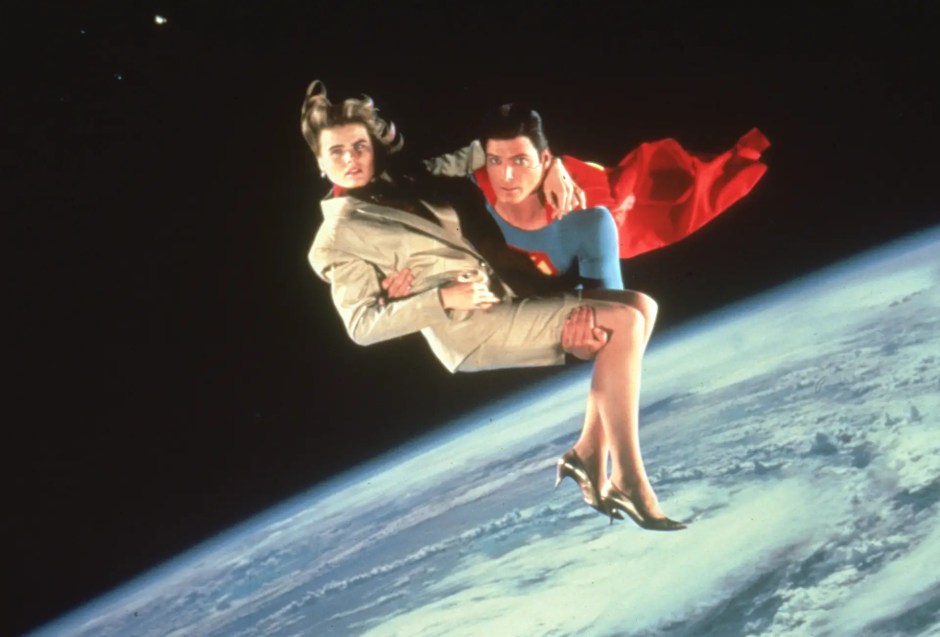
Superman IV: The Quest for Peace (1987)
Next is 1987’s Superman IV: The Quest for Peace, starring Christopher Reeve, Gene Hackman, Margot Kidder, Mariel Hemingway, and Jon Cryer. This fourthquel sees Superman trying to rid the world of nuclear weapons, while Lex Luthor answers by creating Nuclear Man.
To me Superman IV is one of the more fascinating Cannon movies because the idea behind it is actually pretty sincere. Reeve as part of his negotiations was given limited creative control and he cared about the subject. And giving Superman a story about nuclear disarmament during the Cold War is not a bad concept at all. He’s not just stopping a bank robbery or punching a villain through a wall. He’s trying to take on one of humanity’s biggest fears.
The problem is that the movie didn’t have the size, polish, or support system to pull that off. Instead of a grand superhero epic, it often feels like Superman is trying to save the world with a few recycled sets, some very tired visual effects, and a cape doing its absolute best.
That’s where the Cannon factor really kicks in. This is the studio grabbing one of the biggest superhero brands on Earth and trying to make it work with pure nerve, a reduced budget, and a lot of wishful thinking. And the result is not good in the traditional sense, but it is hard to ignore. Christopher Reeve still gives real effort, which makes the whole thing a little bittersweet. Gene Hackman brings back Lex Luthor with his usual confidence, and Jon Cryer adds a strange little dose of comic energy as Luthor’s nephew. Then there is Nuclear Man, who is both unforgettable and completely baffling, which is honestly a very Cannon combination.
But the bigger impact was what it did to the Superman film series. This was the end of Christopher Reeve’s theatrical run as Superman, and the character would not return in a new solo film until Superman Returns in 2006. And sure, Superman IV is rough, overly sincere, and wildly underpowered for what it’s trying to accomplish. But as a Cannon artifact, it may be the clearest example of the studio’s whole identity: huge ambition, shaky execution, and absolutely no fear of going bigger than it could afford. It grossed about $36.7 million worldwide on a reported $17 million budget but crumbled under the weight of word-of-mouth scrutiny and spandex jokes.
Now before we jump into a strange buddy-cop mashup later in the list, let’s leave Metropolis behind and head into a much darker corner of the Cannon universe. No capes. No speeches at the UN. Just Charles Bronson, gritty Los Angeles streets, and a sequel that takes its series into much harsher territory.
Death Wish II (1982)
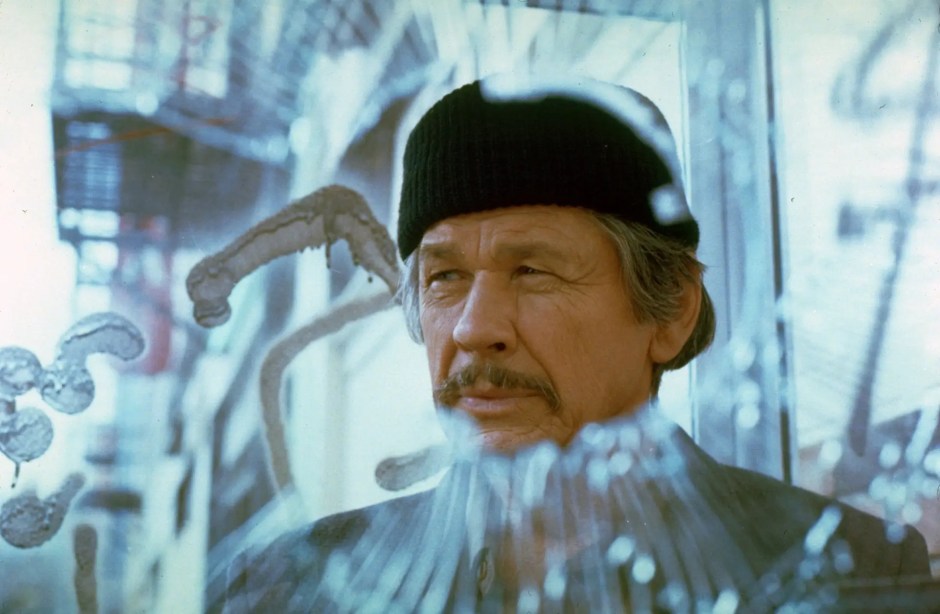
Stepping into the grimy side of the action genre we have 1982’s Death Wish II, starring Charles Bronson, Jill Ireland, Vincent Gardenia, and a young Laurence Fishburne. In this sequel Paul Kersey is living in Los Angeles when another personal tragedy pushes him back into pure street-level vigilante revenge.
Now Death Wish II is one of the tougher Cannon movies to talk about because it is important to the studio’s history, but it’s also a pretty unpleasant watch during stretches. The original Death Wish from 1974 had plenty of controversy, but it also had that cold 70s urban anxiety running through it. It felt like a movie about grief, fear, and a man slowly losing himself while trying to convince himself he was taking control. Death Wish II is different. It pushes the material much further into exploitation territory. It’s meaner, more direct, and much less interested in moral gray areas.
Also, by this point, Paul Kersey isn’t slowly becoming a vigilante. He’s basically a ready-to-go justice machine the minute the movie starts tightening the screws. Which is part of why it became such a defining Cannon title. This is where Charles Bronson really becomes one of the studio’s signature action figures. And I do mean that with respect. Bronson did not need to overplay anything. He had that carved-from-granite screen presence where a raised eyebrow could feel like a final warning. So, he earns the moniker. And his second outing showed no softness at all, which is both the reason it has impact and the reason it can be hard to sit with.
The film made about $16.1M, which was enough to prove Paul Kersey still had box office life. It also helped push the series deeper into 80s action territory. A fun bit of trivia: the score was composed by Jimmy Page of Led Zeppelin, which I think gives the movie an extra jolt of swagger.
Death Wish II is not subtle, and it’s definitely not comfortable. The revenge elements are built to satisfy a certain audience expectation, but the road getting there is grim and heavy-handed. But in Cannon history, it matters because it helped define the studio’s harder, grimmer action identity and turned Bronson into one of its most reliable symbols of blunt-force justice. And yes, that is a young Laurence Fishburne showing up here.
Moving right along, we could use a little lightning of the mood. Which is conveniently right in Cannon’s wheelhouse because next up is a buddy-cop movie starring Robert Carradine and Billy Dee Williams. Because with Cannon, the next tape on the shelf always feels like it was chosen by a very confident roulette wheel.
Number One with a Bullet (1987)
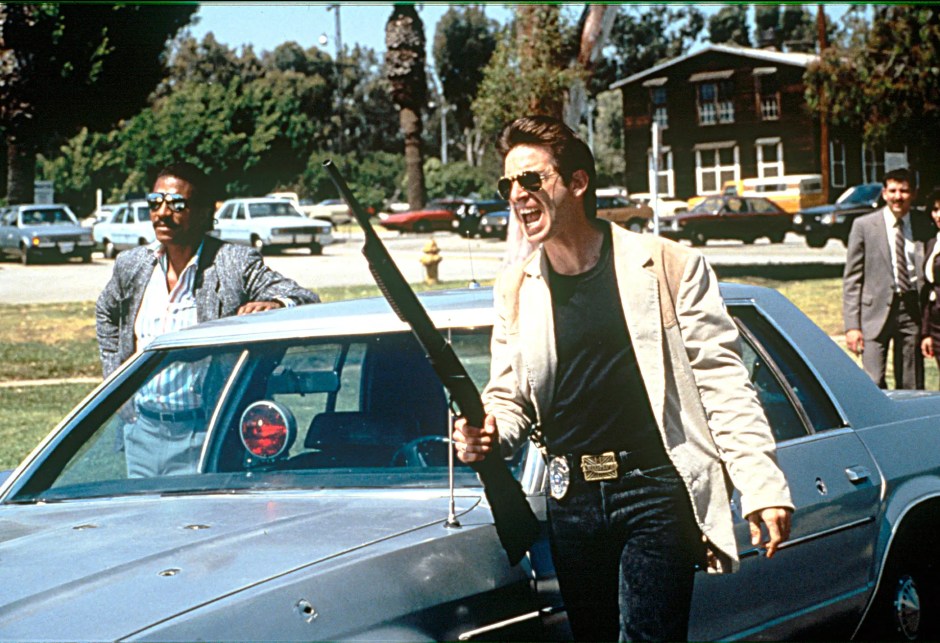
We’re sticking with the action genre and stepping into 1987 for Number One with a Bullet, starring Robert Carradine and Billy Dee Williams as two Los Angeles detectives working a murder case that delves into corruption, organized crime, and a very 80s mix of shootouts, attitude, and buddy-cop chaos.
Number One with a Bullet might be one of the most “only from Cannon Films” movies in this episode. On paper, it sounds like a relatively normal 80s buddy-cop thriller. Two detectives. A murder case. Corruption. Organized crime. Sunglasses inside. Some car chases. Some attitude. Probably a saxophone somewhere in the distance. But then you get to the cast. Carradine and Williams is not the first pairing most studios would dream up for this kind of movie, and at the same time that’s exactly what makes it interesting.
Carradine was clearly trying to step away from the image a lot of viewers had from Revenge of the Nerds to play something tougher and more reckless. Billy Dee Williams, meanwhile, brings actual “movie-star cool” to the whole thing. He has that ability to make even basic dialogue feel smoother than it actually is. And whenever he’s onscreen, the movie immediately gets a little more stylish. The main issue is that Number One with a Bullet never quite becomes the sharp, punchy buddy-cop gem you want it to be. It has an unusual cast, real 80s texture, and just enough Cannon weirdness to stay interesting, but it also feels stuck between crime thriller, action comedy, and TV series pilot.
You can almost hear the movie searching for its identity while the bullets are already flying. And the box office was not kind. It only made around $410K in the US, which means it basically disappeared from theaters and had to find whatever audience it could through VHS, and late-night cable curiosity.
One interesting behind-the-scenes note is that Jim Belushi was originally attached as both star and co-writer before leaving the project, with Carradine stepping into the role. Once you know that, the movie makes a little more sense. You can feel the ghost of a Belushi-style wisecracking cop movie floating around in this one with Williams. Regardless, it’s not a lost classic, but it is a perfect Cannon curiosity: a movie that never fully locks in, yet stays watchable because the casting is odd, the tone is unstable, and the whole thing feels like a relic of 80s experimental filmmaking where studios took shots whether smart or not.
And now for our final tape, we’re leaving the crime-ridden streets of L.A. and heading into full childhood nightmare territory. Strange hills. Nervous adults. Alien neck implants. And Tobe Hooper taking a 1950s sci-fi classic and turning the weirdness knob to max levels.
Invaders from Mars (1986)
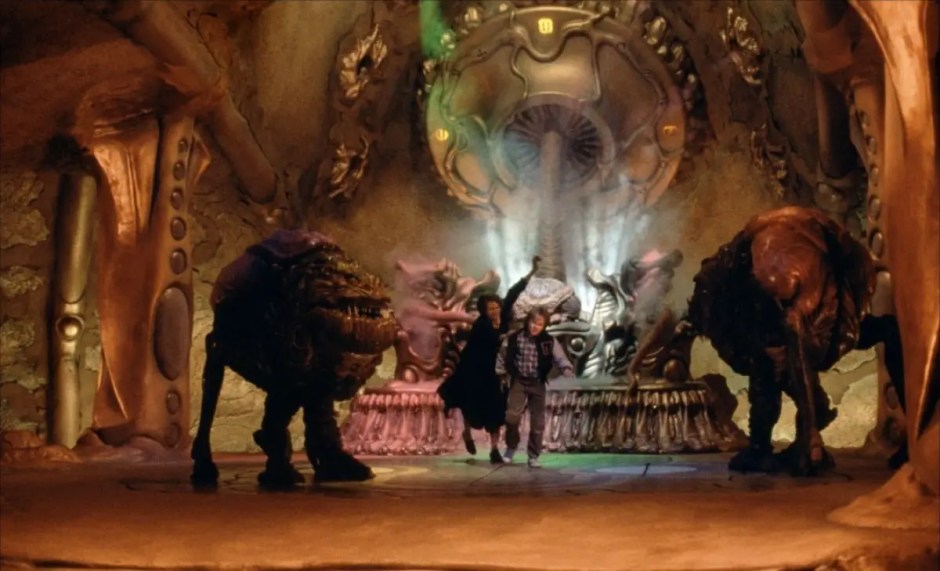
We’re having some fun for this last one tonight. It’s 1986’s Invaders from Mars, directed by Tobe Hooper. This movie follows a young boy who sees a flying saucer land near his home and realizes the adults around him are slowly being taken over by alien invaders.
Now Invaders from Mars feels like a movie built out of a kid’s nightmare. It’s a remake of the 1953 film, but Tobe Hooper doesn’t turn it into a slick, modern alien invasion thriller. Instead, he leans into the artificial quality of it. The colors are strange. The sets feel a little unreal. The town looks normal at first, but not quite normal enough. Like it was something created from the imagination of a kid.
And that’s what makes the movie interesting. It’s not really grounded paranoia. It’s childhood paranoia. It’s the fear that something is wrong, that the adults are acting strangely, and that nobody’s listening to you. So, despite the subject the themes are relatable.
Hunter Carson plays David, the young boy who sees the invasion before anyone believes him. Karen Black brings a wonderfully offbeat warmth as the school nurse who starts to trust him. And the rest of the adult cast gives the movie that uneasy feeling that every grown-up might be either useless, suspicious, or already taken over. Which, depending on your childhood, may feel disturbingly accurate.
As a Cannon release, Invaders from Mars was ambitious in that wonderfully wobbly Cannon way. You can see the effort in the creature work, the sets, and the big finale, but you can also feel the tone bouncing around. Sometimes it’s creepy. Sometimes it’s goofy. Sometimes it feels like a Saturday matinee that wandered into the wrong cinema.
The movie made about $4.9M against a $7M budget, so it was a theatrical misfire. But this is exactly the kind of movie that could survive in the video store era. The box art, the title, the alien promise, the Tobe Hooper name. That was enough to get a curious kid to pick it up and wonder if they were making a terrible decision. It’s uneven, but it’s exactly the kind of Cannon movie that sticks in your head: too strange to be polished, too specific to be disposable, and built like a kid’s bad dream that somehow made it onto a video store shelf.
And that’s a wrap on episode 4 of our Cannon Films shelf dive. We did teen heartbreak, saw a superhero collapse, dispensed vigilante revenge, played with buddy-cop confusion, and dove headfirst into alien invasion paranoia. Which, honestly, feels like a pretty damn good Cannon Films marathon.
And that’s why these movies are still fun to revisit. Not because they’re all masterpieces. They are very much not. But even the misfires usually have something going on: a strange casting choice, a wild concept, a sincere idea trapped inside of a cheap production, or a movie star trying to hold the whole thing together with pure screen presence and a stern expression.
Cannon movies rarely feel anonymous. They feel like somebody made a big bet, lost track of the chips, and kept filming anyway. And that is a big part of why they still matter: even when they fail, they fail in ways that have personality.
Anthony J. Digioia II © 2026

SilverScreen Analysis & Sunset Video Rentals
