Now there was a weird moment in the mid-90s when horror movies felt like they were running out of gas. Freddy had already gone meta. Jason had gone to Hell. Michael Myers was having some family problems no one wanted to get into. And the slasher movie, once one of the most reliable tenants in the video store, had started looking a little dusty.
Then, in December of 1996, a phone rang. And suddenly everybody wanted back into the horror business. Now Scream didn’t invent the slasher movie. It didn’t even invent self-aware horror. But what it did was figure out how to make the slasher movie feel young again. And for the next few years, Hollywood chased that feeling everywhere.
This is the story of the late-90s teen horror explosion. And naturally, it starts in Woodsboro. When Scream arrived on December 20th 1996, even its release date was unusual. This wasn’t October. This was Christmas weekend.
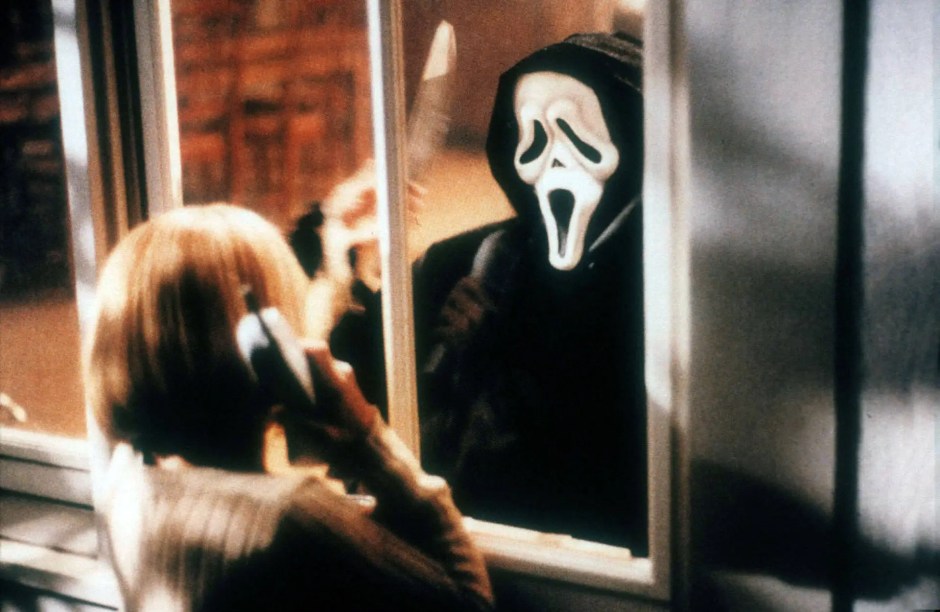
Nothing says holiday cheer quite like Ghostface asking what your favorite scary movie is. The movie opened to a fairly modest $6.4M. Nothing to pop a bottle of Cristal over. But here’s where things got interesting. Instead of disappearing after opening weekend, Scream just kept hanging around. Made for roughly $14M, it would spend 9 weeks in the top ten and eventually cross $103M domestically with international totals pushing the tally to more than $173M worldwide.
Now that’s the kind of performance Hollywood notices. Writer Kevin Williamson and director Wes Craven took the basic machinery of the old slasher movie and added something that felt completely right for the 1990s: characters who had already seen all the movies. They knew the rules. They knew splitting up was a terrible idea. They knew saying “I’ll be right back” was basically signing your own death certificate. The audience was in on the joke, but Scream never forgot that the killer still had a deadly knife and an appetite for death.
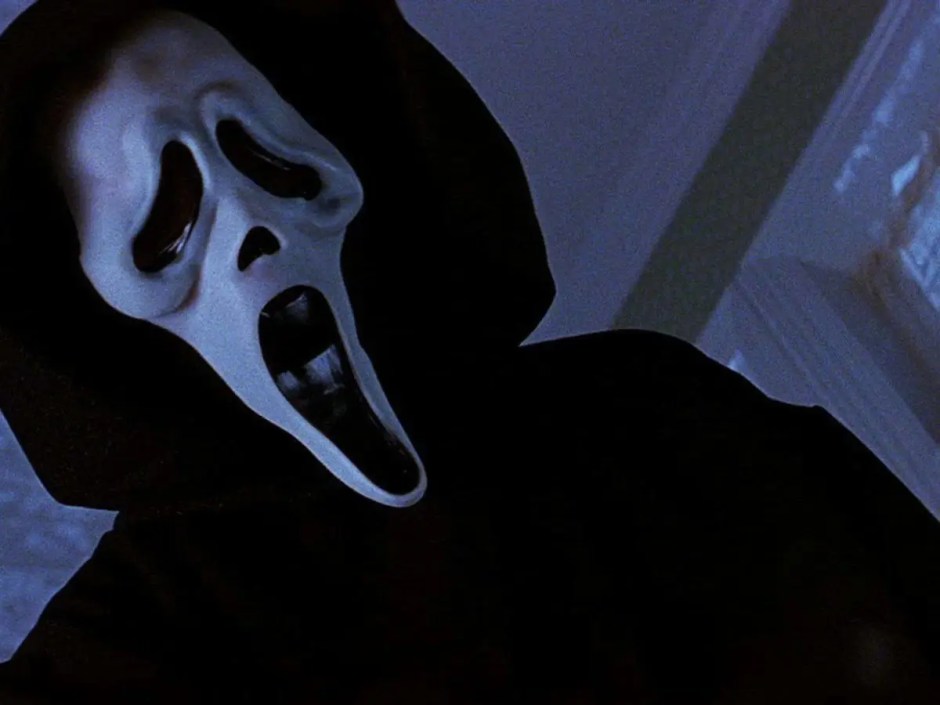
And just like that, horror had a new template. Young recognizable actors. Pop-culture dialogue. Contemporary music. Slick photography. And attractive people making catastrophically poor decisions. So, basically, MTV had wandered into the horror aisle.
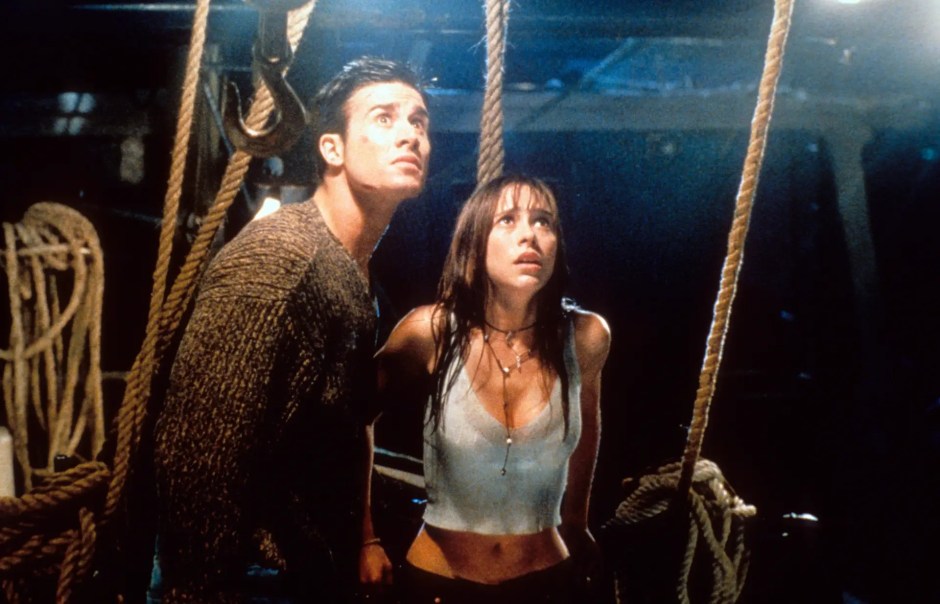
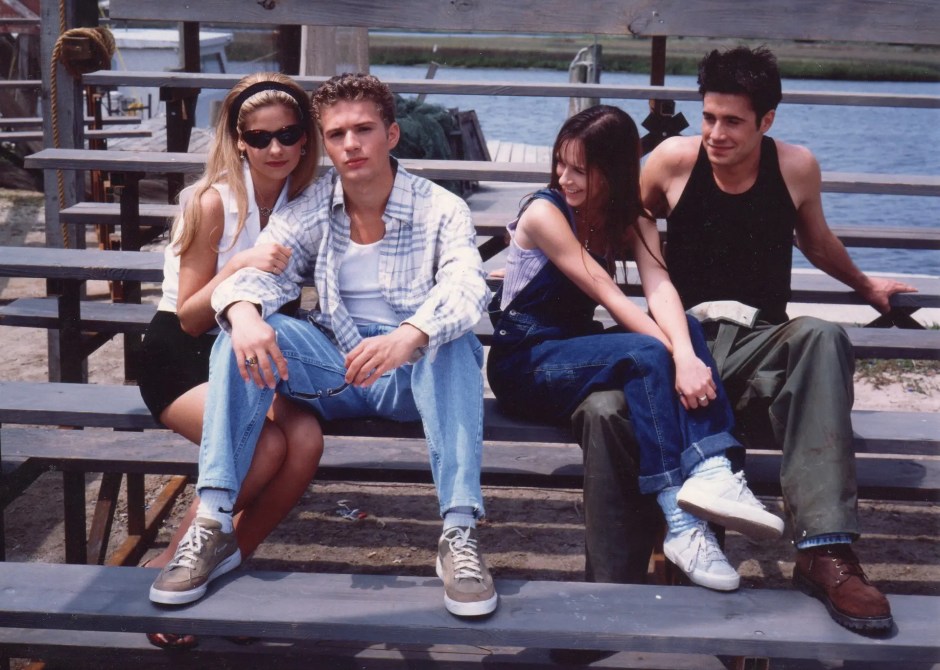
The real proof that this wasn’t just a one-movie fluke would arrive less than a year later. I Know What You Did Last Summer hit theaters in October 1997, also written by Kevin Williamson, although this time adapted from a Lois Duncan novel. And unlike Scream, it wasn’t particularly interested in making jokes about horror movies. Williamson reworked the material into something much closer to a traditional slasher picture. But the packaging? Pure late 90s excellence. Jennifer Love Hewitt. Sarah Michelle Gellar. Ryan Phillippe. Freddie Prinze Jr. If you watched television in 1997, that cast practically came with a WB logo attached.
Now the movie cost around $17M and opened with $15.8M, more than double Scream‘s opening weekend. Even more impressive, it stayed number one for three straight weekends and eventually reached about $72.6M domestically and $125.6M worldwide. So by that point the message was pretty clear. Teenagers, plus recognizable young stars, plus a killer with an easily marketable weapon, equaled truckloads of money. And that’s when the floodgates really opened.
By 1998, you couldn’t walk ten feet through the horror section without somebody stalking a college student.
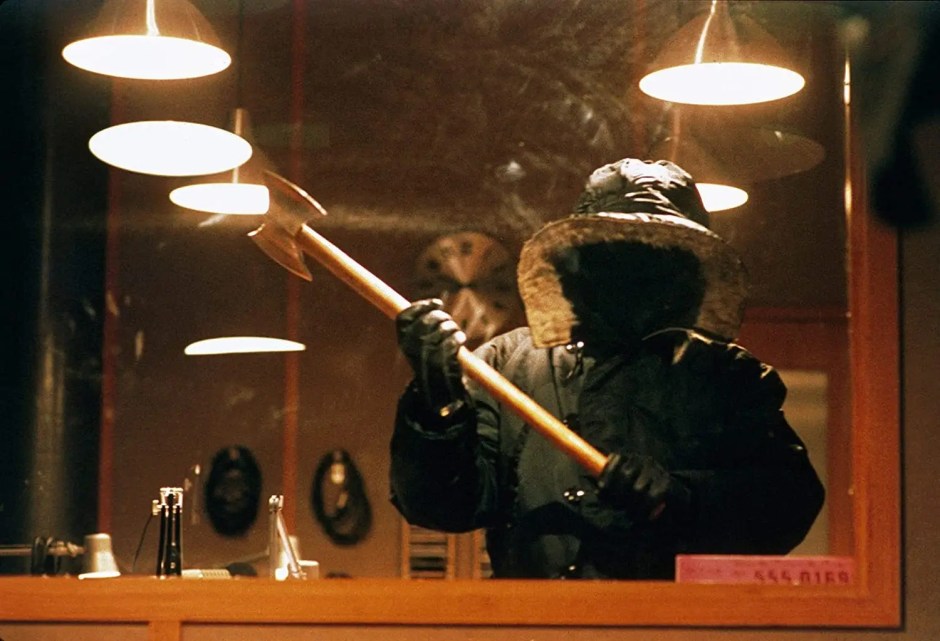
I think Urban Legend might be the most wonderfully late-90s example of the whole wash and repeat cycle. Instead of horror-movie rules, the gimmick was urban legends. The killer wasn’t just murdering people. They were recreating stories everybody had heard from a friend’s cousin’s roommate’s uncle, who absolutely swore it happened. Pop Rocks and soda. The killer hiding in the back seat. The call coming from inside the house. Suddenly the playground rumors we’d all heard growing up had a body count.
And look at the cast: Jared Leto, Alicia Witt, Rebecca Gayheart, Joshua Jackson, Tara Reid. Another stacked roster of trendy fresh faces to lure you in. And just to remind you that horror has a long memory, Robert Englund and Brad Dourif show up too. That’s almost the entire late-90s pop-culture ecosystem jammed into one movie.
Now Urban Legend was produced for about $14M, opened with $10.5M, and finished with roughly $38M in the states, and a little over $72.5M worldwide. Certainly not Scream numbers, but plenty of evidence that there was still money sitting on that rental rack.
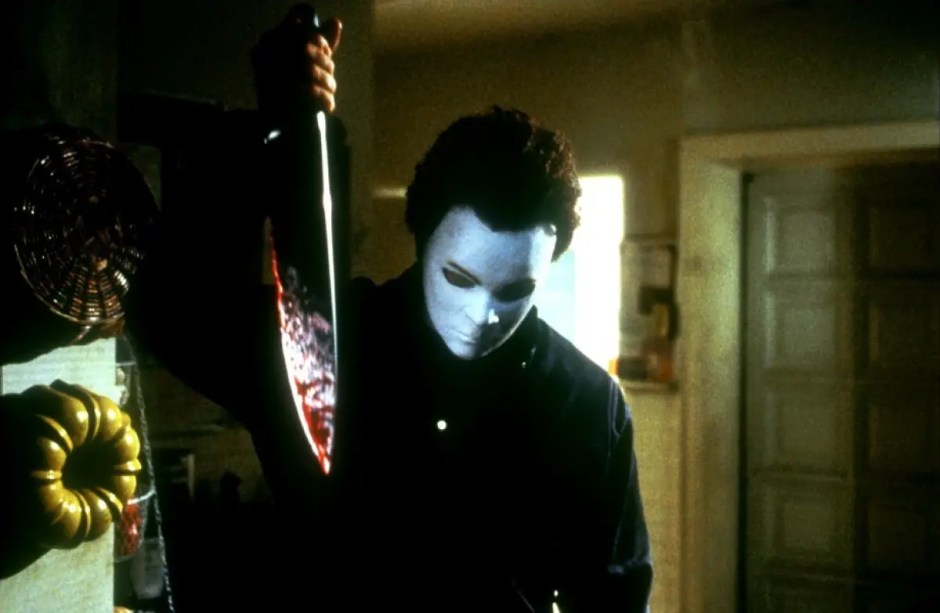
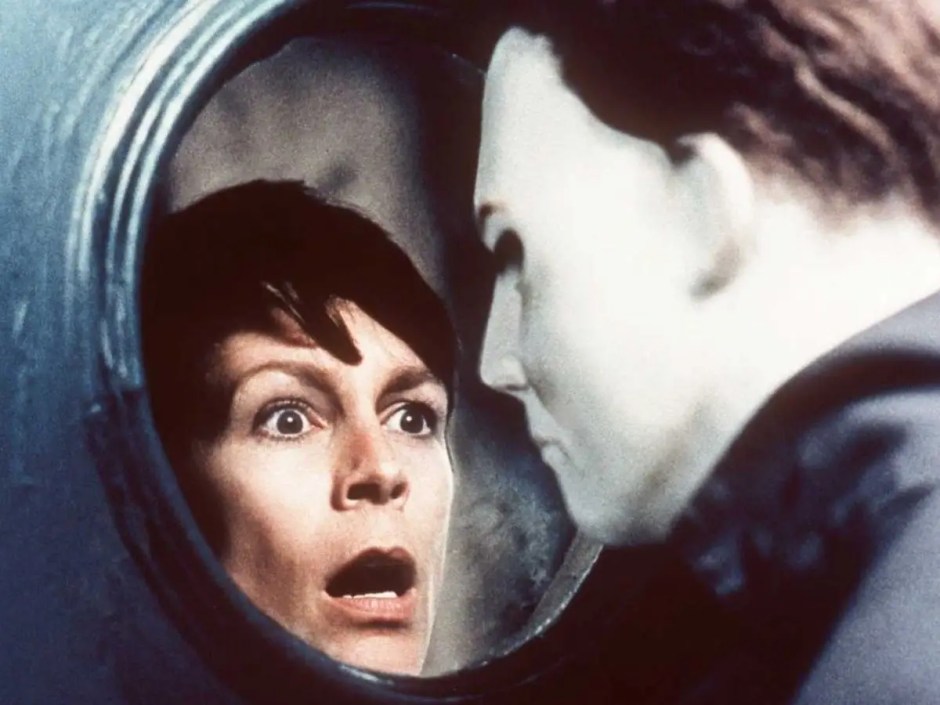
And the influence didn’t stop with new franchises. It actually traveled backward. In 1998, Michael Myers came walking back into theaters with Halloween H20: 20 Years Later. Jamie Lee Curtis returned as Laurie Strode, but this wasn’t presented like another grungy 80s slasher sequel. This thing looked and felt like it belonged beside Scream. You had Josh Hartnett, Michelle Williams, and Joseph Gordon-Levitt. You had a private-school setting. You had the polished late-90s presentation. The old slasher generation had essentially been repackaged for the new one. And audiences responded.
On a budget of around $17M, H20 opened with $16.2M and finished with just over $55M domestically. Which was sort of crazy for a 7th movie in a horror franchise. I mean think about how strange that cycle is. Movies like Halloween helped create Scream. Then Scream became such a phenomenon that the Halloween franchise came back looking a little bit like Scream.
Hollywood had eaten its own tail, put a soundtrack on it, and sold us a ticket. But my favorite thing about this era was how quickly the formula began spilling outside of the traditional slasher movie.
Take The Faculty. Released on Christmas Day 1998, directed by Robert Rodriguez and written by Kevin Williamson, this time the threat wasn’t some guy in a raincoat. It was aliens. But everything else screamed late-90s teen horror. Josh Hartnett. Jordana Brewster. Clea DuVall. Shawn Hatosy. Elijah Wood. Usher. A group of high-school archetypes realizing that their teachers may have been taken over by extraterrestrial parasites. It’s Invasion of the Body Snatchers after spending an afternoon watching MTV.
The movie cost about $15M, opened with $11.6M and eventually earned just over $40M domestically. And that tells you how broad this movement had become. You didn’t even need a masked killer anymore. What studios really wanted was the audience and they had the updated recipe to draw them in. Young cast. Contemporary soundtrack. Horror concept. Put it on a poster and get it into multiplexes before somebody else does. Simple as that.

Now, of course, every boom eventually gets a little weird. By 1999 we got Idle Hands, where Devon Sawa’s possessed hand starts killing people while Seth Green and Elden Henson spend most of the movie as undead stoner sidekicks. Financially, this was where the formula finally stumbled. With an estimated $15M budget, Idle Hands opened to only about $1.8M and finished with around $4M domestically.
But that’s also why movies from this period became such great video-store titles. The theatrical numbers weren’t always the end of the story. Some of these movies found their real audience later, sitting on VHS shelves with a cool cover and a couple of familiar faces staring back at you.
And looking back, that’s what makes this little window from 1996 through 1999 so much fun. It wasn’t just a return of the slasher. It was horror becoming part of mainstream youth culture again. Scream kicked open the door. I Know What You Did Last Summer proved there was an audience waiting behind it. Urban Legend turned the formula into a full-blown trend. Halloween H20 showed the old guard could adapt. And The Faculty proved you could take that same energy and plug it into practically any genre you wanted.

For a few years, horror movies had movie stars, hit soundtracks, glossy posters, massive video-store presence and cast rosters that looked like they’d wandered over from whatever was playing on television that Thursday night.
Movies like: Disturbing Behavior, Teaching Mrs. Tingle, Campfire Tales, Scream 2, I Still Know What You Did Last Summer, The Rage: Carrie 2, The Bride of Chucky, The Clown at Midnight, options in the genre and just adjacent the genre were plentiful.
Now was every one of them great? Absolutely not. But walking into a video store in 1998 and seeing Ghostface, Michael Myers, the Fisherman, Chucky and that creepy Urban Legend parka staring back at you? It was a pretty good time to be a browser of the horror aisle.
Anthony J. Digioia II © 2026

SilverScreen Analysis & Sunset Video Rentals